Ten colour-coded categories
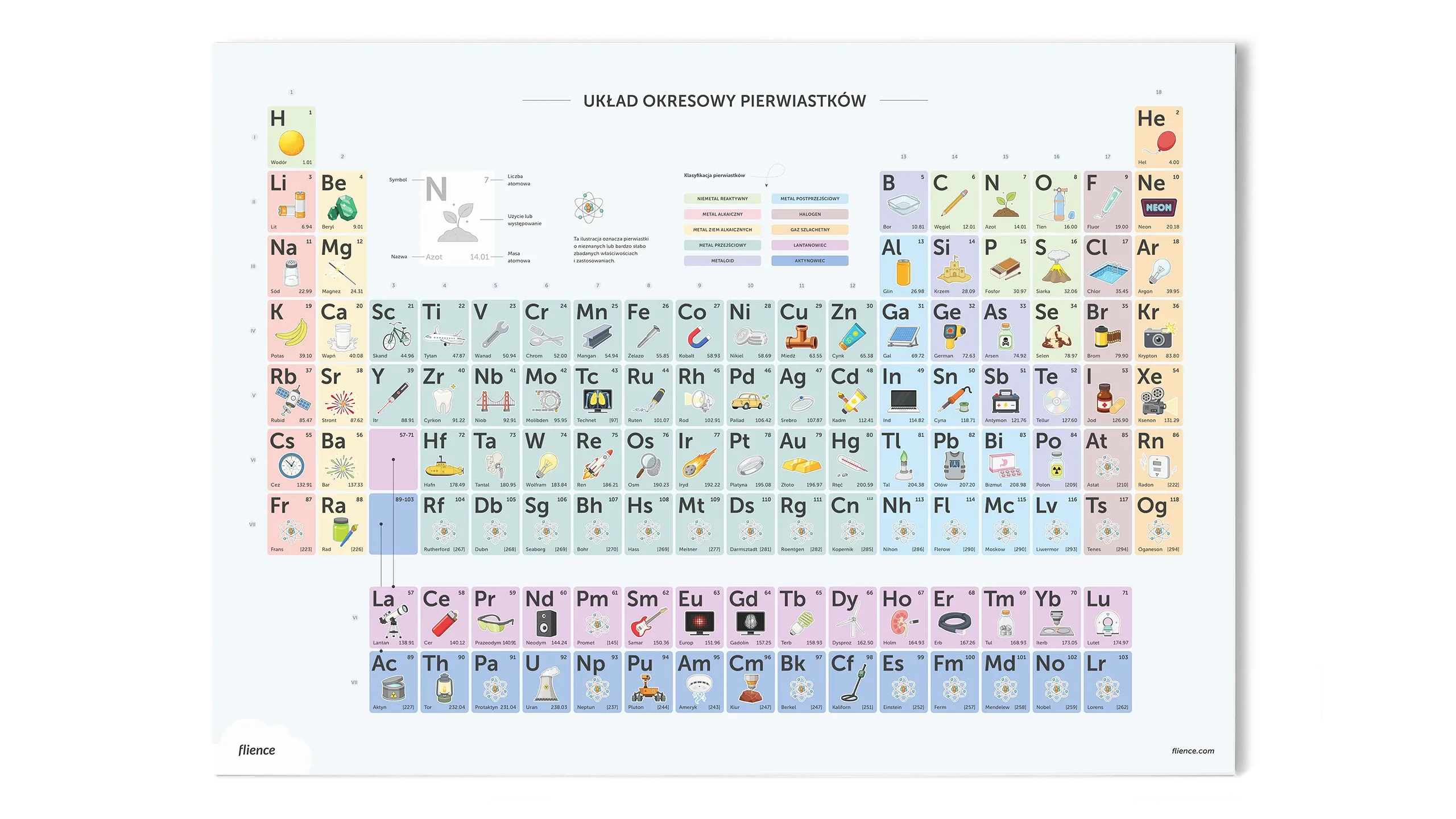
Reactive non-metals, noble gases, halogens, lanthanides. Every family has its own colour, and the legend in the middle says which is which.
A periodic table poster — clear grouping, essential data and colours that make the information easy to find and remember.
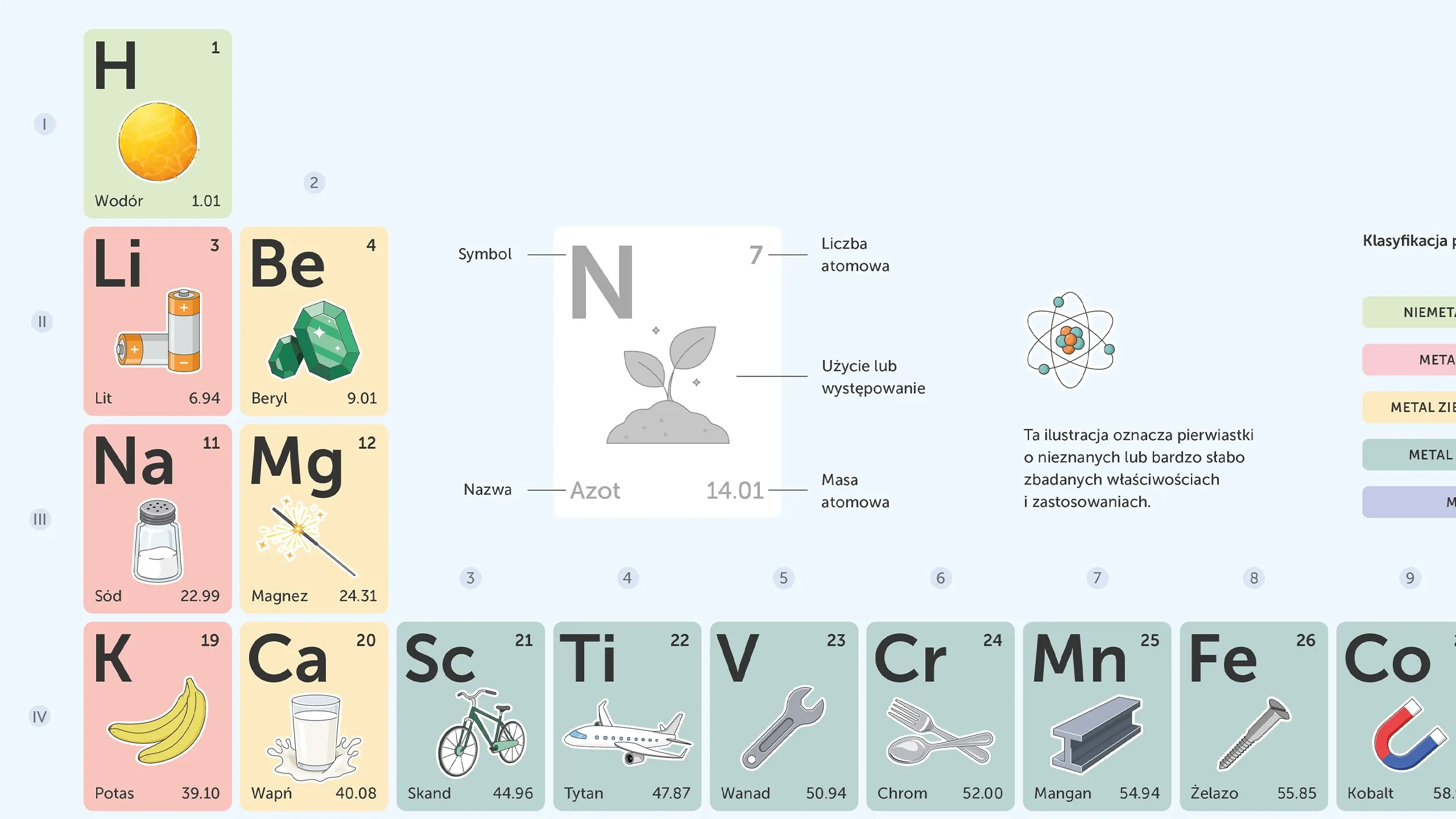
An ordinary periodic table is a grid of symbols and numbers. Here each of the 118 cells carries its own illustration of where you actually meet that element. Nitrogen gets a seedling, because nitrogen is what soil feeds on. The child remembers the picture, and the symbol comes along with it.
Near the top of the poster one cell is taken apart piece by piece, and the legend spells out ten categories in colour. The poster explains itself, so nobody has to stand next to it translating.
At a glance:
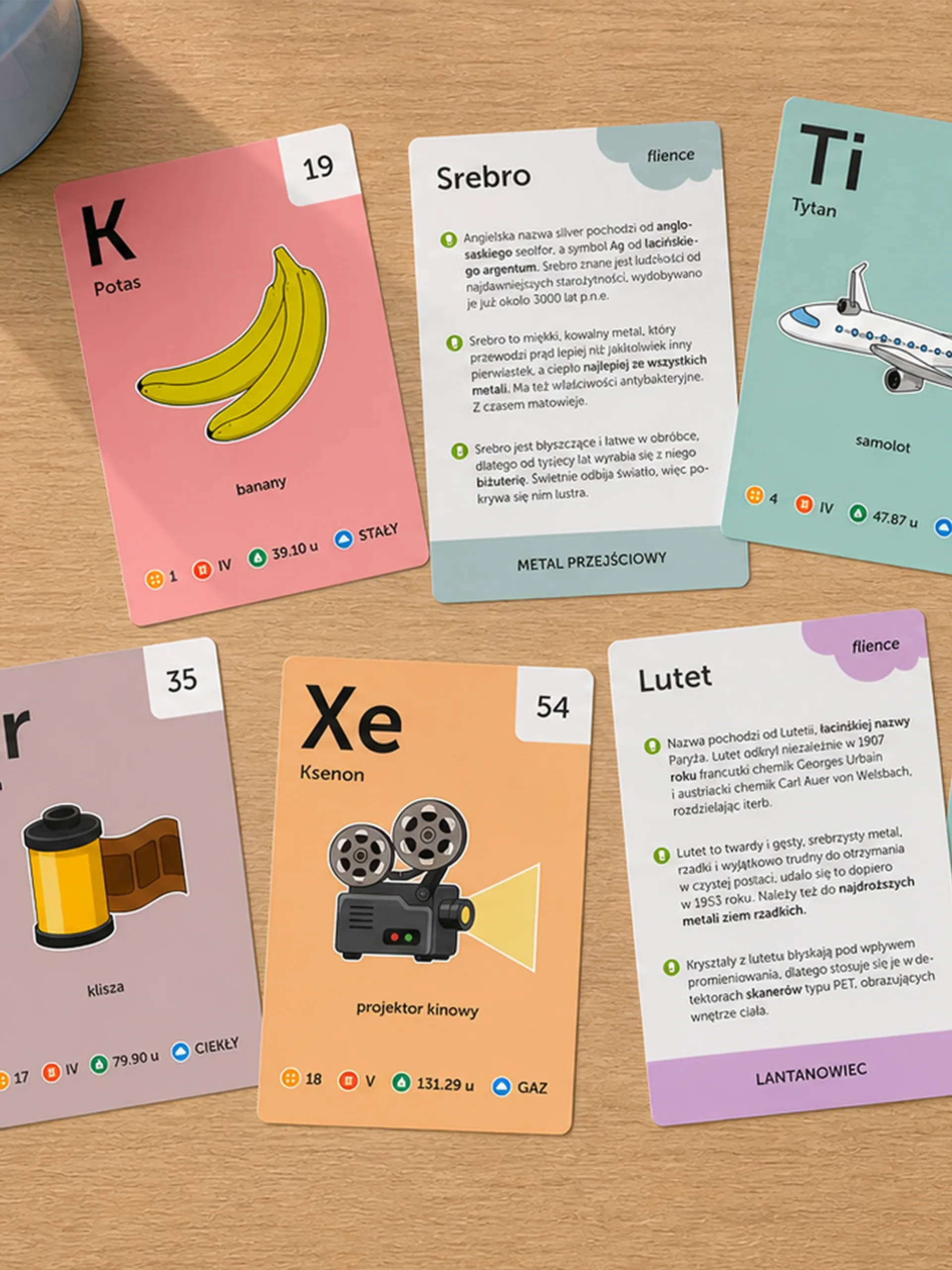
Once the whole table, once a single cell up close. Flip it and see what fits inside one element.
Reactive non-metals, noble gases, halogens, lanthanides. Every family has its own colour, and the legend in the middle says which is which.
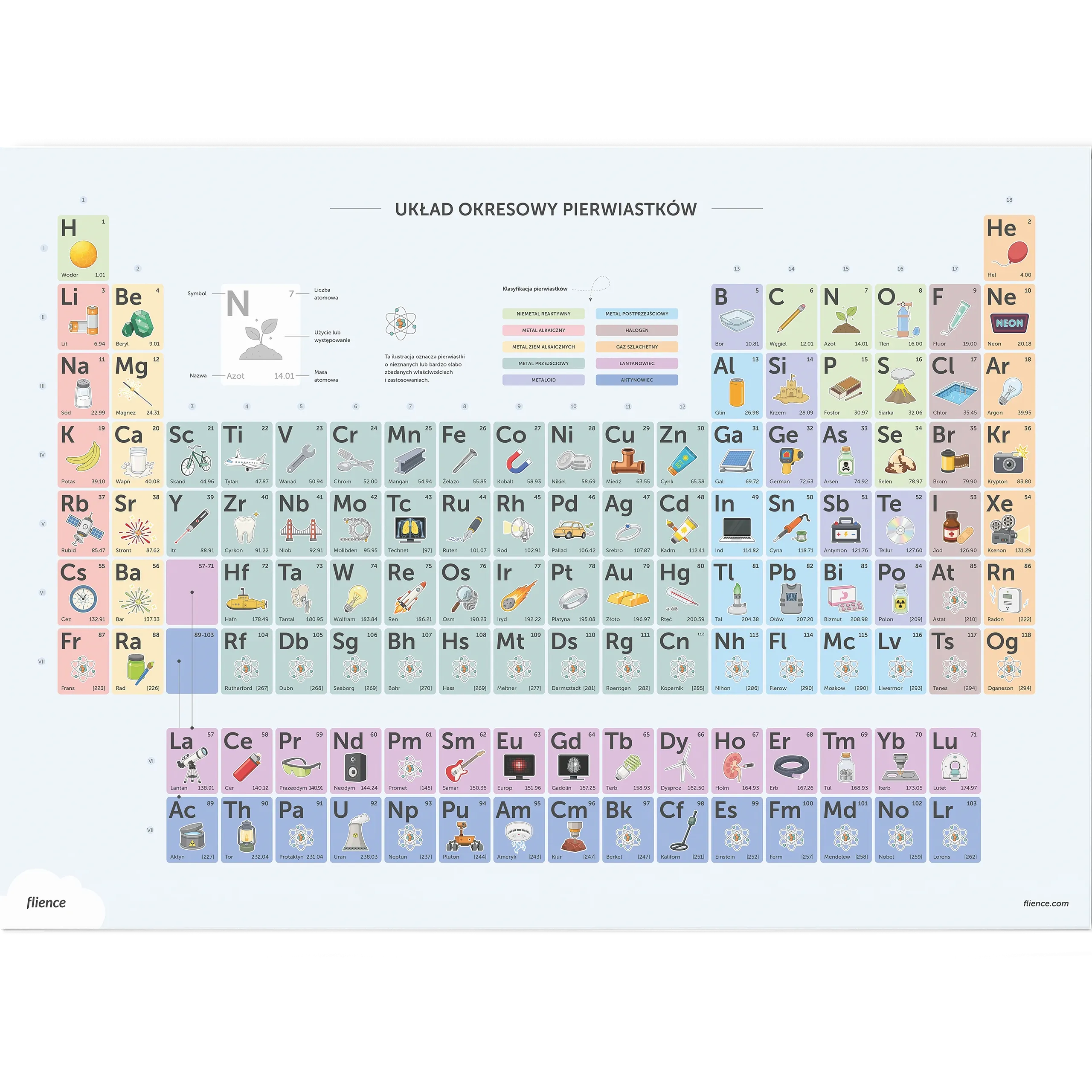
Every known element, from hydrogen to oganesson, in order of atomic number. The complete table, not a selection of the famous ones.
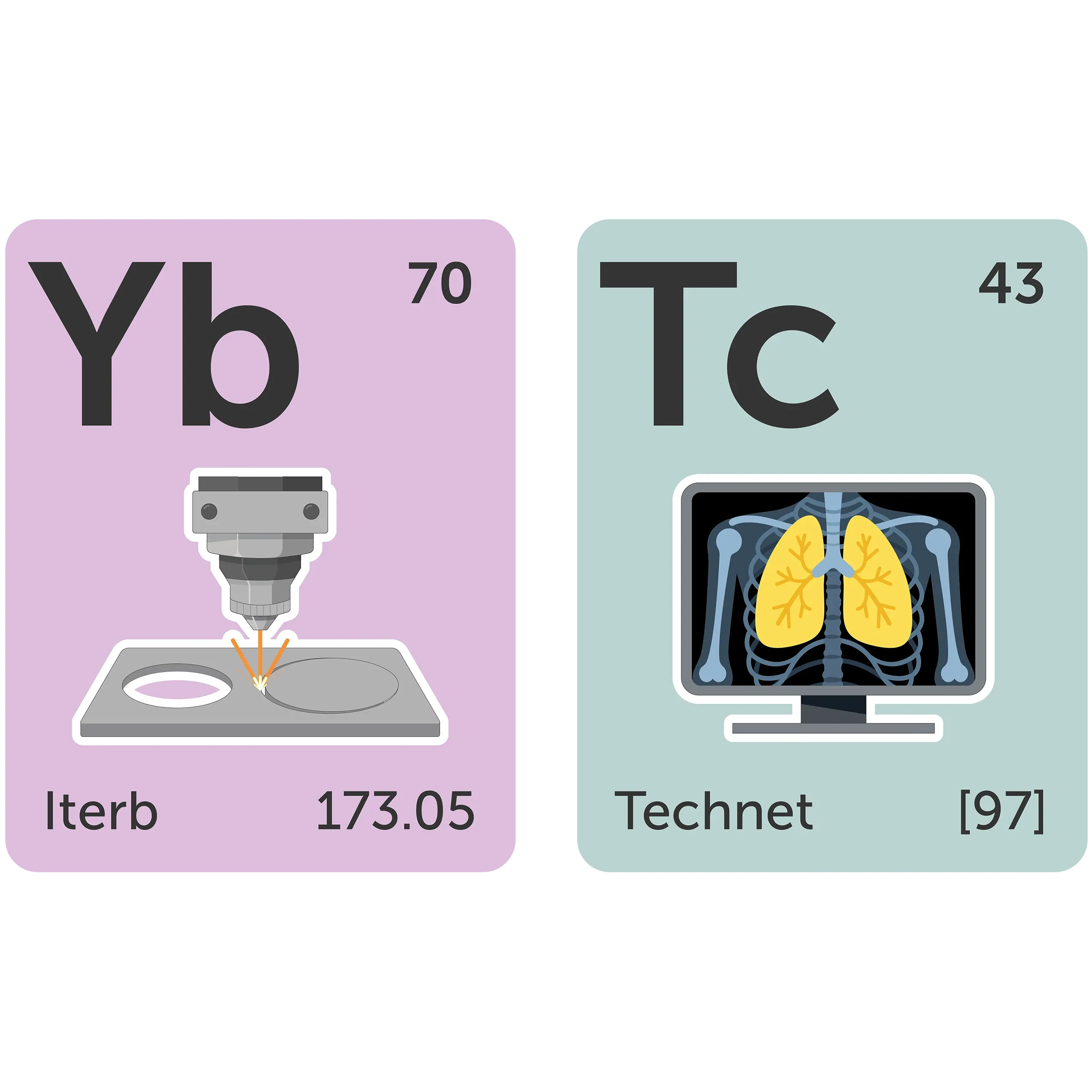
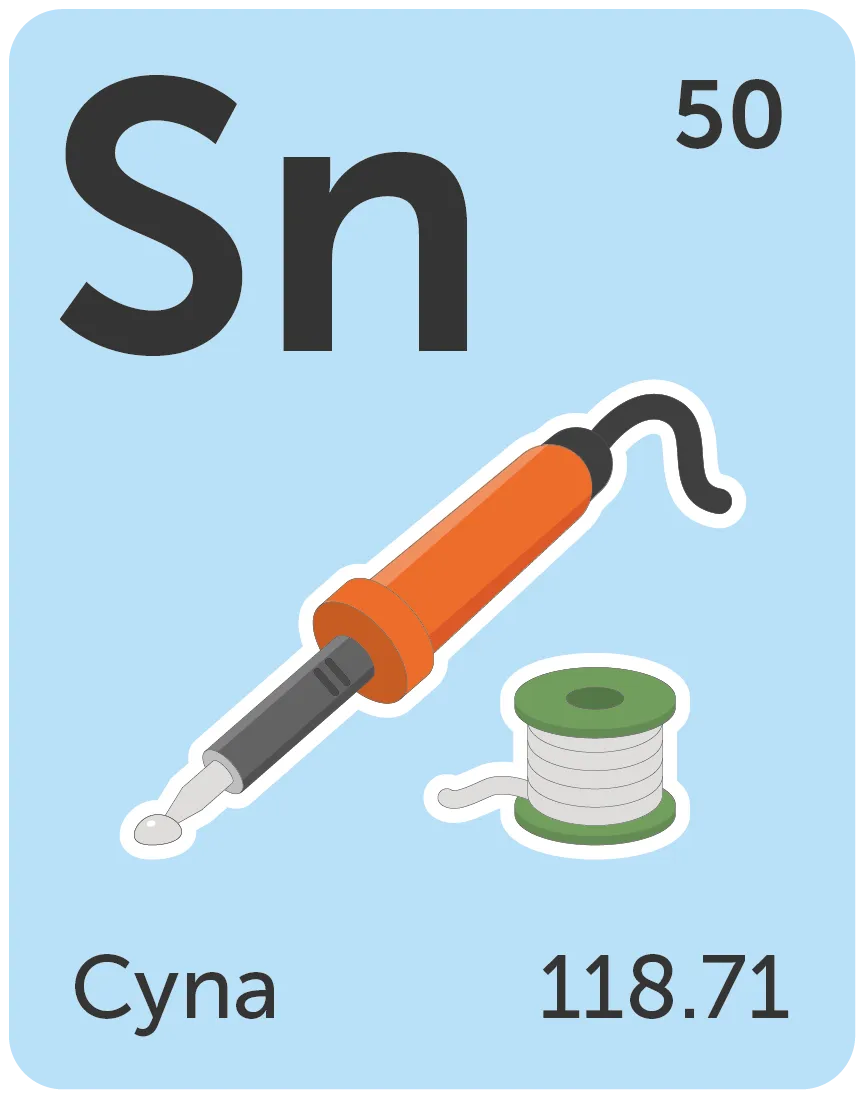
Every cell carries a drawing of where the element turns up or what it is used for. The pictures are how the symbols stay in memory.
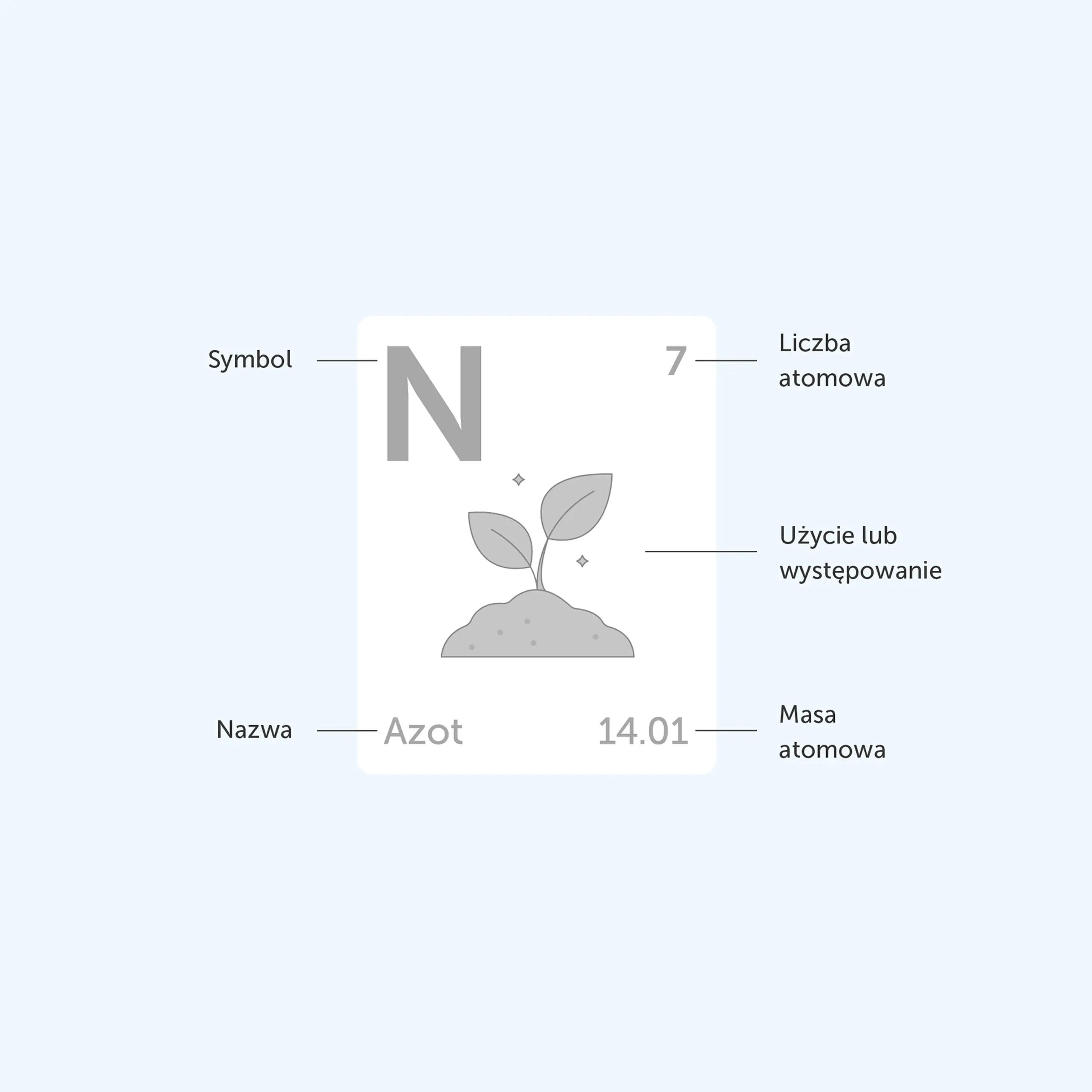
Ten colour-coded categories plus the nitrogen cell taken apart piece by piece. The poster shows you how to read it.
A B1 or B2 poster with all 118 elements, each with its own illustration.
118 double-sided cards, one for every chemical element. The front for recognising it, the back for the story behind the name, a surprising fact and where you find it.
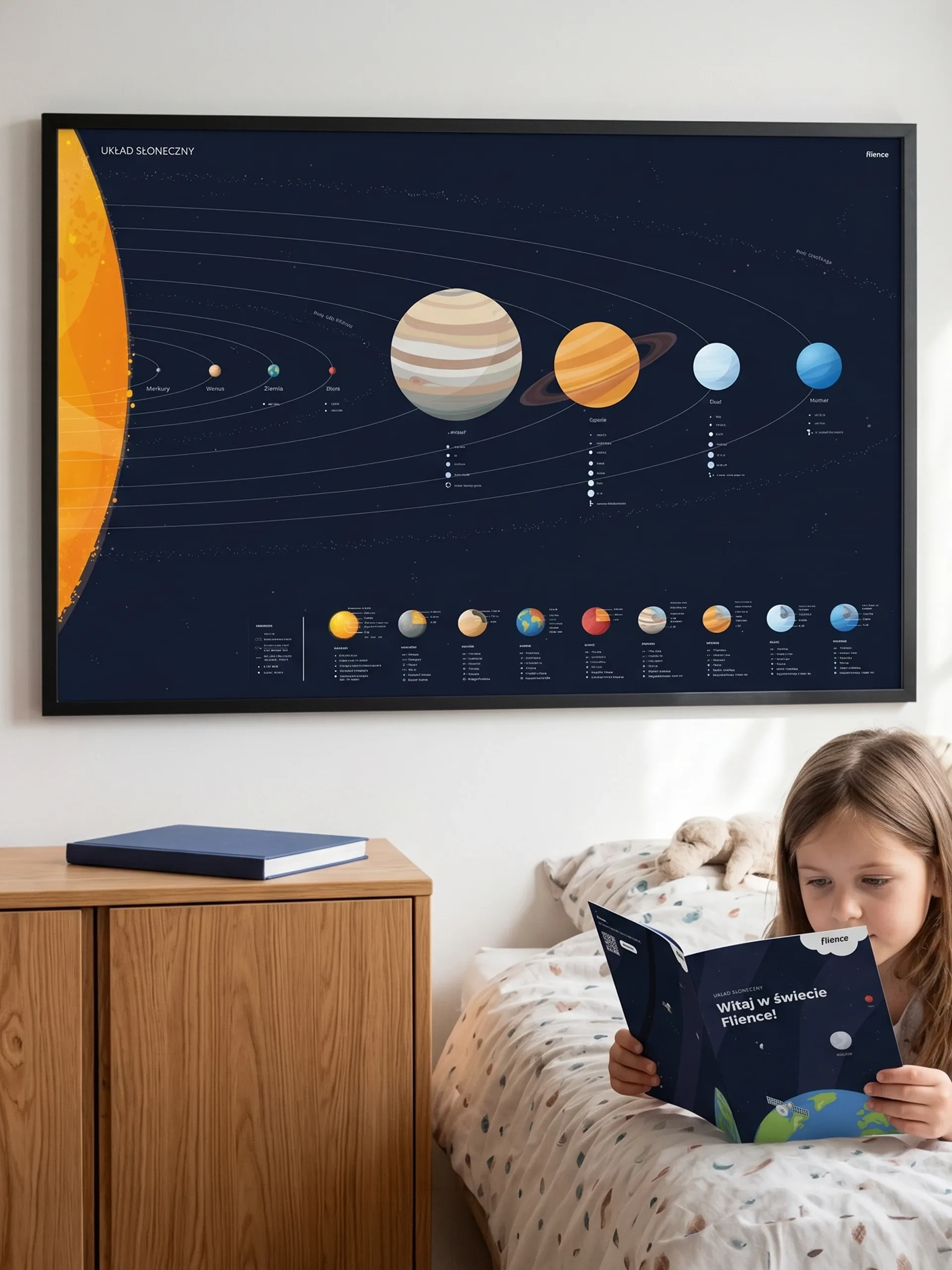
A poster featuring eight planets, their orbits and moons — each paired with a memorable fact. Pluto is missing: since 2006, it has no longer been classified as a planet.