Symbol and atomic number
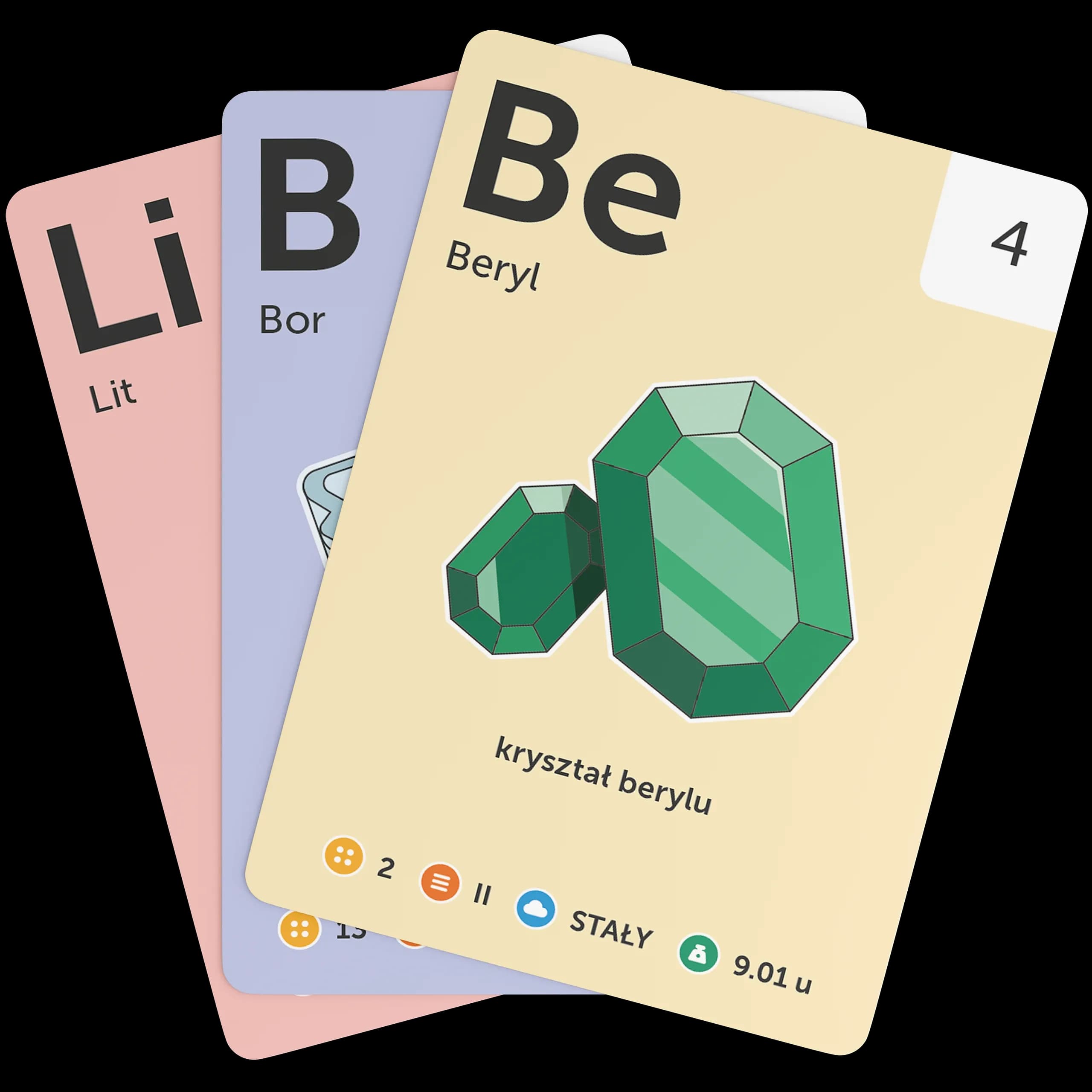
The symbol in capitals in the middle, the atomic number in the corner. Those two are enough to lay the cards out in periodic order.
118 double-sided cards, one for every chemical element. The front for recognising it, the back for the story behind the name, a surprising fact and where you find it.
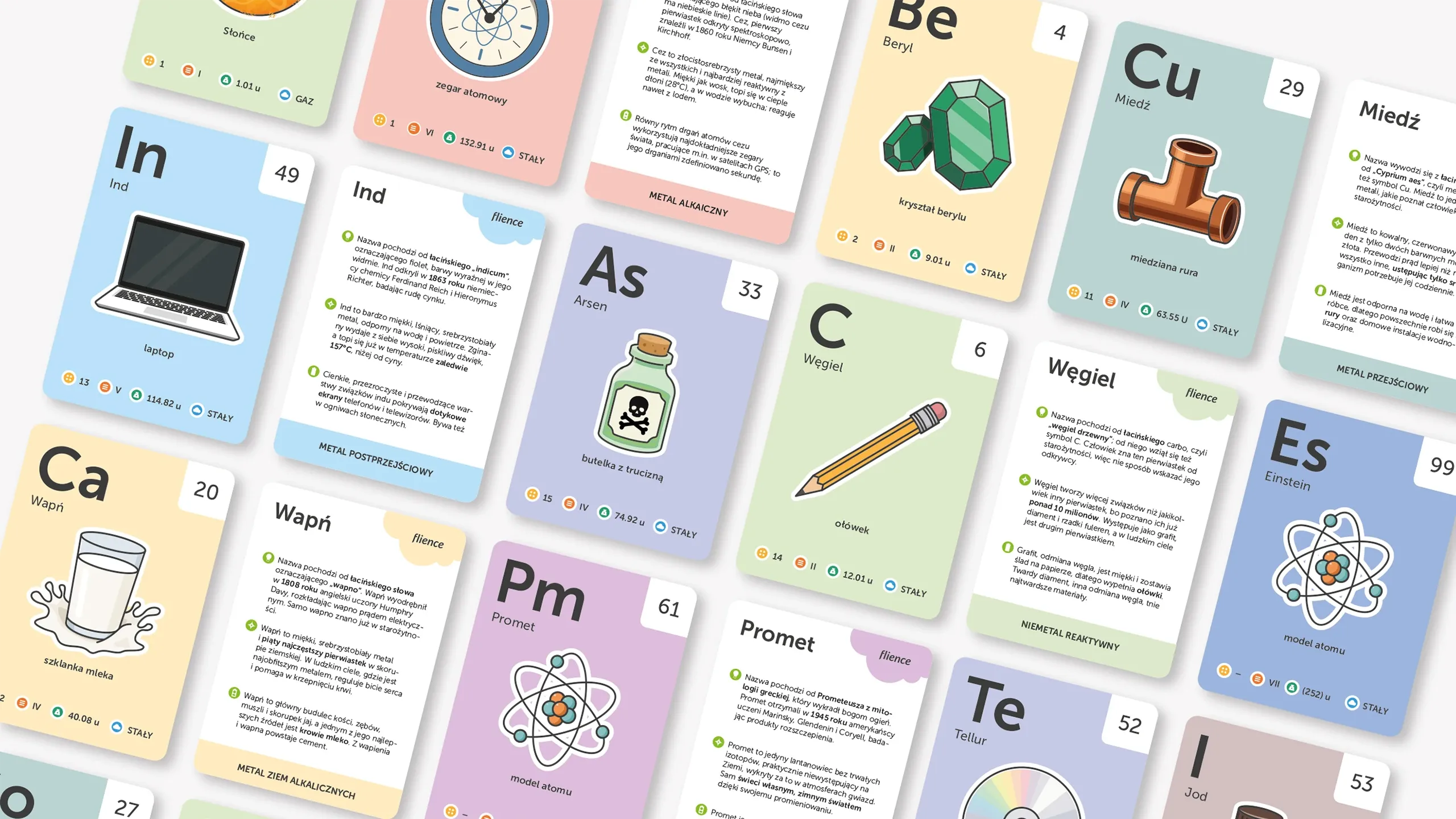
One card, two sides. The front to recognise it, the back to understand it.
The symbol in capitals in the middle, the atomic number in the corner. Those two are enough to lay the cards out in periodic order.
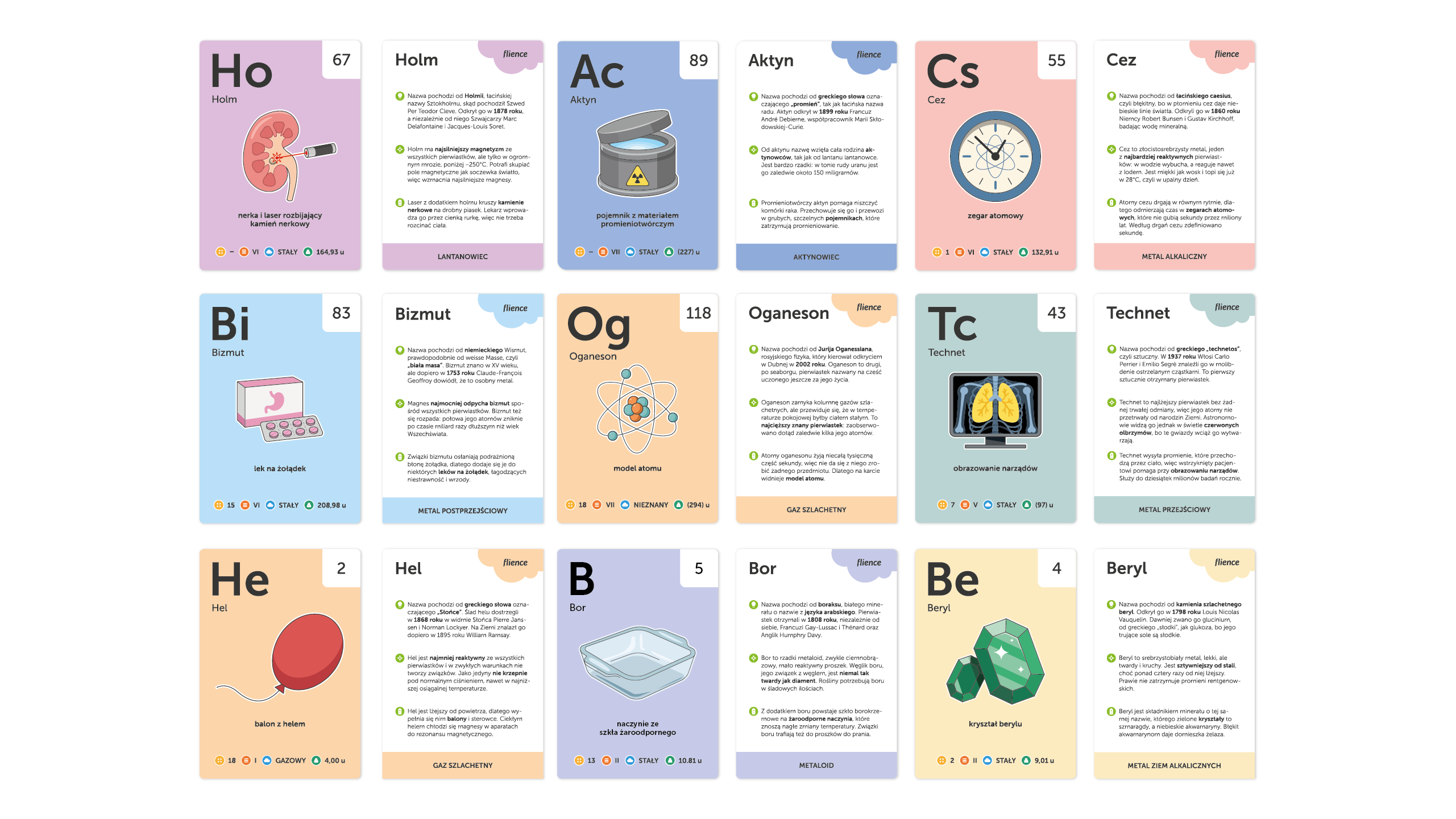
One hundred and eighteen cards, one for every element. No gaps and no shortlist of the famous ones: the whole periodic table in a box.
Build the periodic table from the cards by group and period. Quiz in pairs: one reads the back, the other guesses the element. Sort by state of matter or category. Play memory.
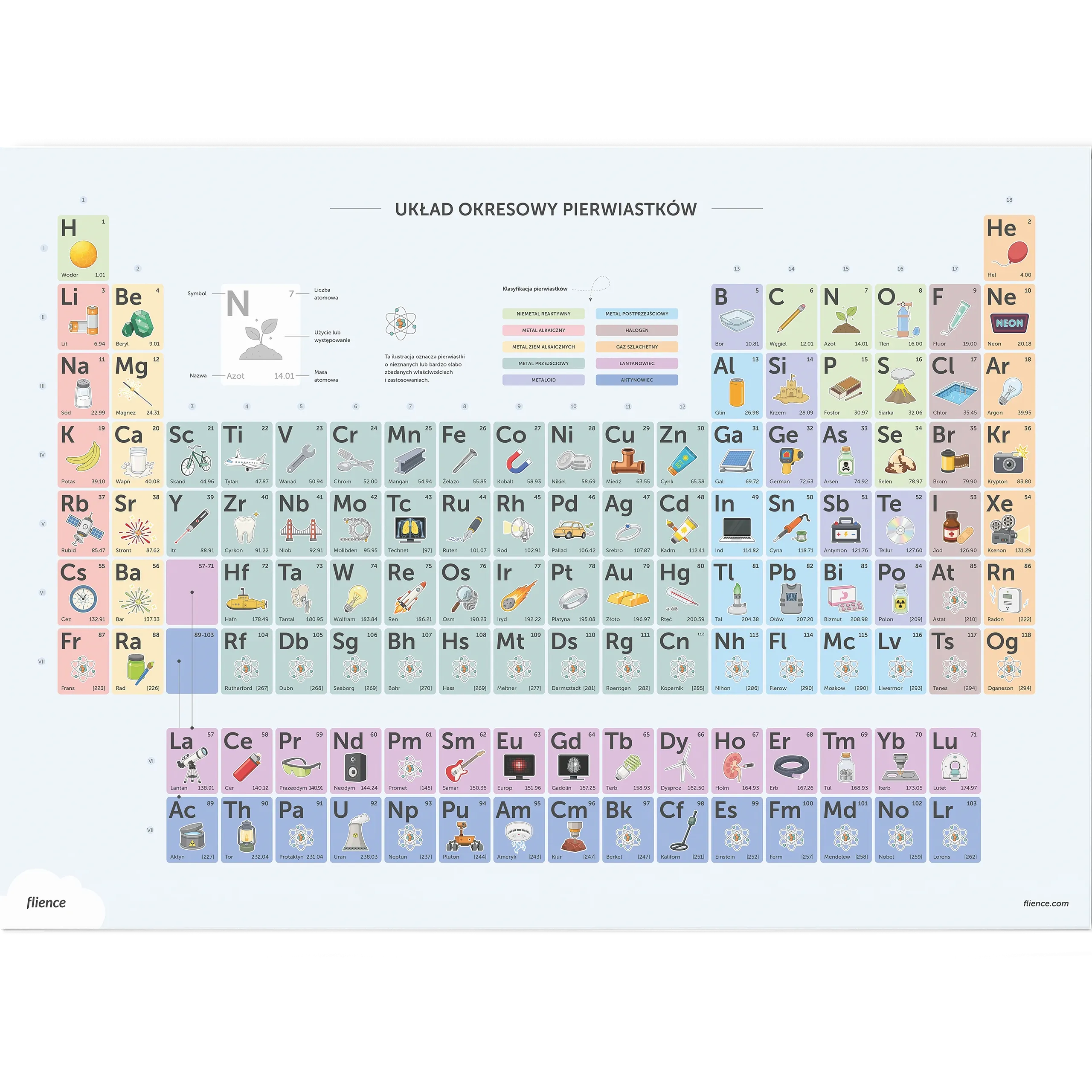
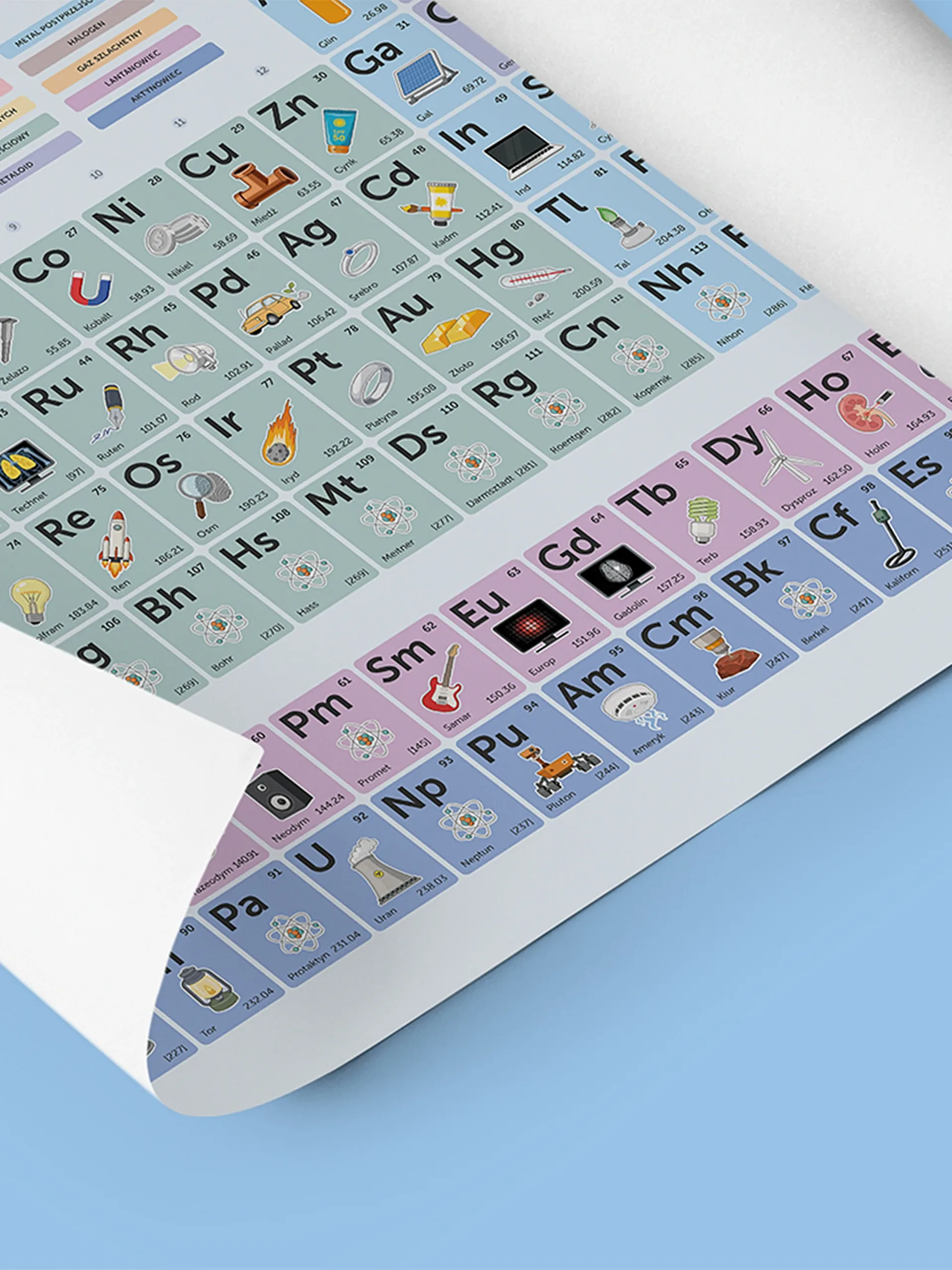
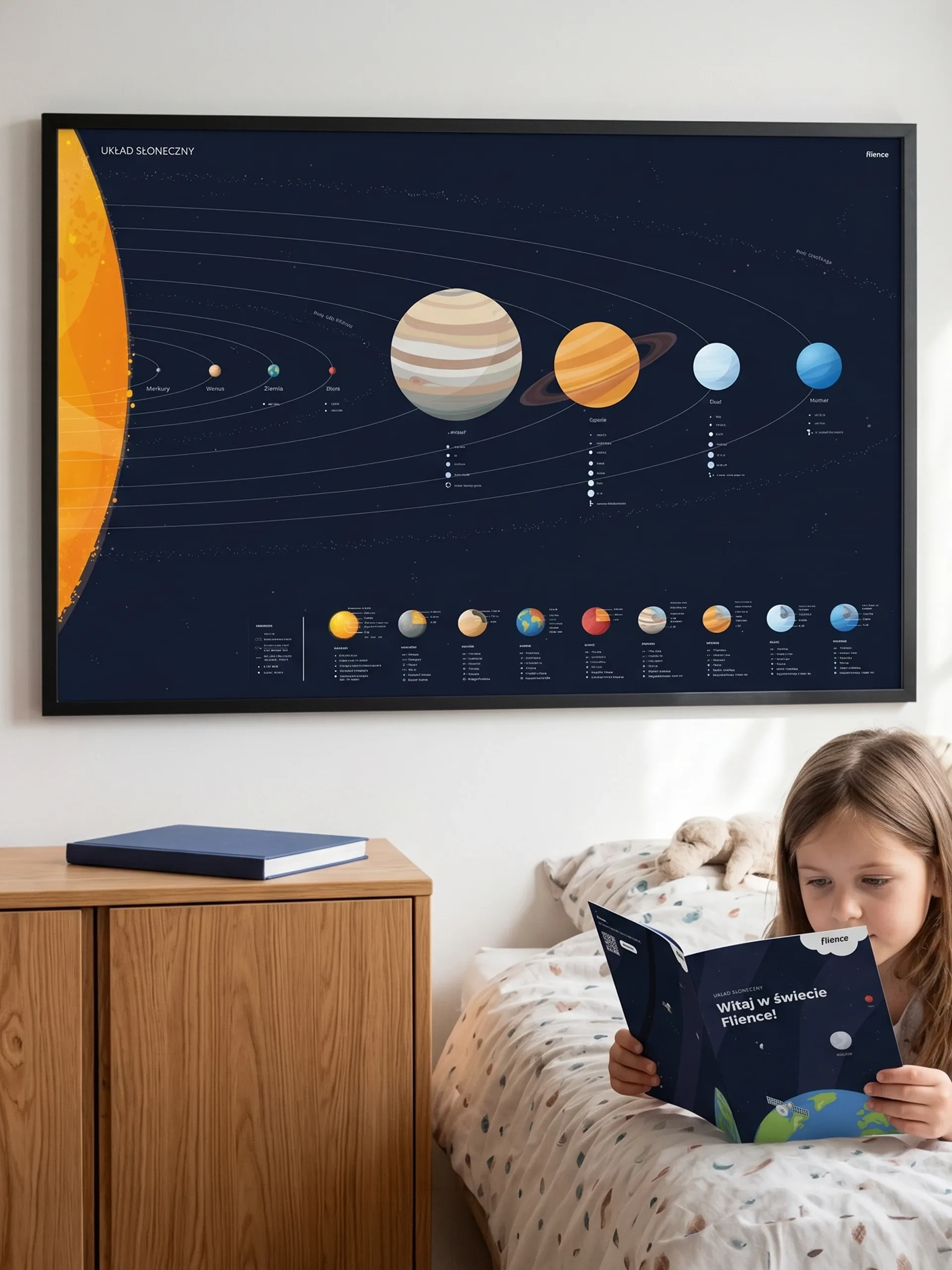
The cards are a companion to the periodic table poster. Same classification, same language of illustration, so what the child saw on the wall comes back into their hands.
118 double-sided element cards in a box, ready to spread out on the table.
Each card is one element and two sides. The front you read in a second: symbol, atomic number, name and an illustration of where you actually meet that element. Caesium gets an atomic clock, ytterbium a cutting laser.
The back tells three short stories: where the name came from, what is surprising about the element and where you will find it. At the bottom sits the classification category, the same one that has its colour on the poster.
At a glance: